Start with the heaviest payload you will actually fly, then check four things: flight time at that payload, total takeoff weight against the FAA’s 55-pound line, whether the program needs NDAA or Blue UAS clearance, and what the full package costs to keep flying. Spec-sheet flight times are usually measured with no payload. The H4C Quad, for example, is rated for 50 minutes empty and about 24 minutes carrying its full 4 kg.
A five-step checklist
- Weigh the real payload. Sensor, mount, gimbal and cabling together, not the sensor alone.
- Get flight time at that payload. Ask the manufacturer for endurance at your weight, not empty.
- Add up takeoff weight. Aircraft, batteries or fuel, and payload. At 55 pounds or more, the FAA rules change.
- Check the procurement rules. Defense programs need NDAA Section 848 compliance and often Blue UAS. Other federal buyers have their own restrictions.
- Price the package, not the airframe. Batteries, chargers, ground control, cases, spares, training and the sensor integration.
How much payload capacity do you really need?
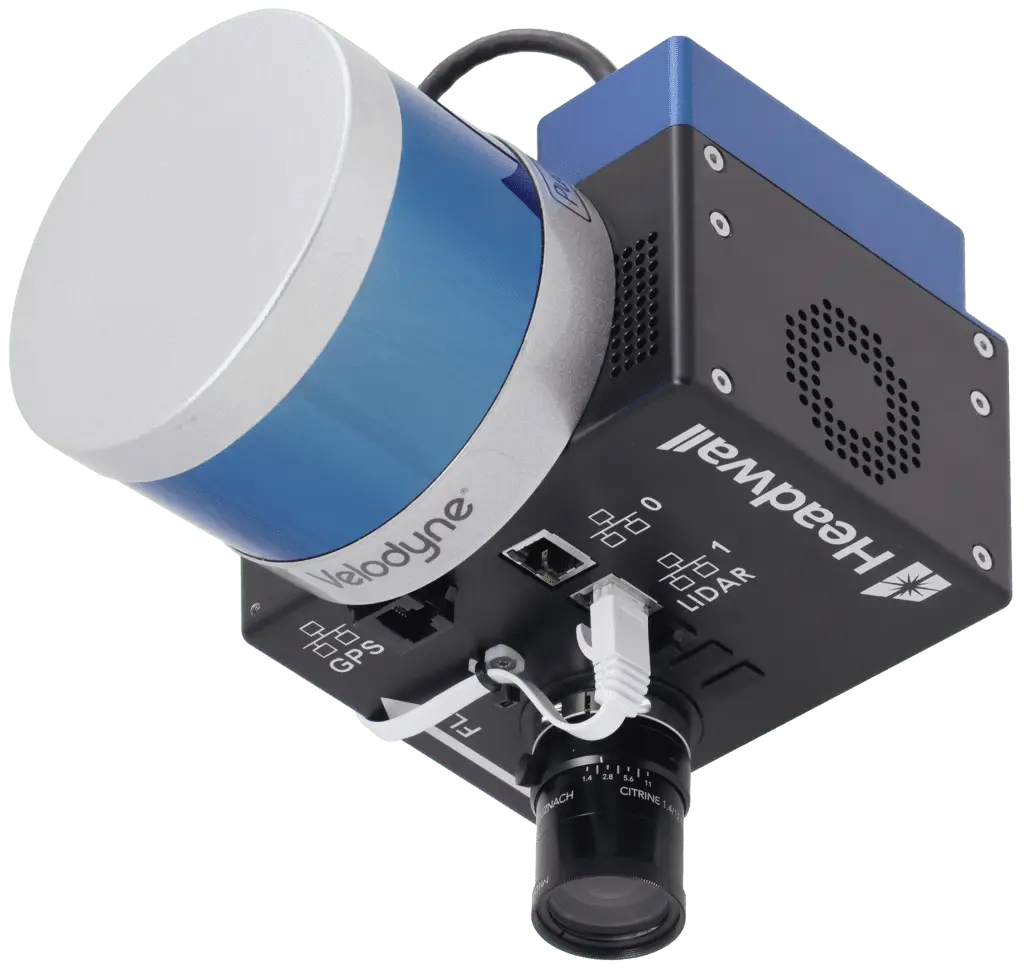
More than the sensor’s catalog weight. A survey-grade LiDAR such as the GeoCue TrueView 680 weighs 4.97 kg for the payload unit alone, before the mount. Add the hardware that connects it to the aircraft and leave margin. An aircraft flown at its maximum payload every day has no room for a second sensor next year. If you are still choosing the sensor, our LiDAR vs hyperspectral vs RGB guide compares what each one answers and weighs.
| Platform | Max payload | Max takeoff weight | Max flight time (no payload) | Blue UAS |
|---|---|---|---|---|
| H4C Quad | 4 kg (8.8 lbs) | 12.15 kg (26.8 lbs) | 50 min (about 24 min at 4 kg) | No |
| H6 Hybrid EFI | 5 kg (11 lbs) | 25 kg (55.1 lbs) | 240 min | Yes |
| H6 Electric | 8 kg (17.6 lbs) | 25 kg (55.1 lbs) | 48 min | Yes |
| HX8 | 8 kg (17.6 lbs) | 25 kg (55.1 lbs) | 43.2 min | No |
| H6HL | 40 kg (88.2 lbs) | 95 kg (209.4 lbs) | 48 min | Yes |
Why the 55-pound line matters
It decides which FAA rules you fly under. Part 107, the everyday commercial drone rule, covers small unmanned aircraft, which 14 CFR 107.3 defines as weighing “less than 55 pounds on takeoff, including everything that is on board or otherwise attached to the aircraft.” At 55 pounds or more, the operation needs separate FAA authority, usually through the special authority in 49 U.S.C. 44807, and the aircraft registers through the FAA’s Part 47 aircraft registry rather than FAADroneZone.
Three Carrier models, the H6 Electric, the HX8 and the H6 Hybrid EFI, list a 25 kg maximum takeoff weight, which is 55.1 pounds, just over the line. To fly one under Part 107, subtract the aircraft’s flying weight with its batteries or fuel from 24.9 kg; what’s left is your budget for payload and mount. The H6HL, at a 95 kg maximum takeoff weight, is a Section 44807 aircraft from the start, so plan that paperwork before it arrives.
Reading flight time on a spec sheet
Treat the published number as a ceiling. Most flight times, ours included, are measured without a payload, and weight costs endurance quickly: the H4C’s 50 empty minutes drop to about 24 at its full 4 kg.
For long missions, look at the power system before the battery count. The H6 Hybrid EFI trades payload for endurance: it carries 5 kg against the H6 Electric’s 8 kg, and is rated for 240 empty minutes against 48. We explain those trade-offs in how long a hybrid drone can fly. When the aircraft has to hold over one spot for hours, the HX8 Tether draws power from the ground instead of carrying it.
NDAA, Blue UAS and federal buyers
NDAA Section 848 bars the Department of Defense from buying or operating drones built in covered countries or using their critical components, checked part by part. Our Section 848 explainer lists those parts and what to ask for each. Civilian federal agencies face their own limits under the American Security Drone Act, enacted in the FY2024 NDAA.
Blue UAS is the Department of Defense’s list of cleared platforms. Three Harris aircraft are on it: the H6 Electric, the H6 Hybrid EFI and the H6HL, shown side by side on our Blue UAS drones page. Commercial buyers without federal money have more freedom, but check your customers’ contracts before you assume.
What drives the cost
A working heavy-lift package includes the power system (battery sets and chargers, or the fuel system on a hybrid), a ground control station, transport cases, spare propellers, operator training, and the integration work that mounts and wires your sensor. Spare battery sets weigh heavily on the budget, because a field crew that swaps packs between sorties needs enough sets to keep flying while the others charge.
When you compare quotes, check what each one leaves out. The usual gaps are spare battery sets, the charger count, the ground station, training days and the sensor integration itself. Ask for the base platform priced separately from the integration for your specific sensor, so two quotes can be compared line for line.
Frequently asked questions
What counts as a heavy-lift drone?
There is no regulatory definition. In practice the term means multirotors built to carry several kilograms or more, such as survey-grade LiDAR, large cameras or delivery loads. Harris platforms run from 4 kg on the H4C to 40 kg on the H6HL.
Can I fly a drone of 55 pounds or more commercially?
Not under Part 107 alone, which only covers aircraft under 55 pounds at takeoff. Heavier operations need separate FAA authority, most often through the Section 44807 process.
Is a hexacopter better than a quadcopter for heavy lift?
A hex spreads the load across six motors, while a compact quad is faster to deploy for loads up to a few kilograms. We compare them in heavy-lift quadcopter or hexacopter.
Should I buy battery or hybrid?
Battery when payload capacity and quick turnarounds matter most; hybrid when endurance decides the job. On the Carrier H6 platform that is the choice between 8 kg and 48 empty minutes on the H6 Electric, or 5 kg and 240 empty minutes on the H6 Hybrid EFI.
Compare the whole Carrier fleet, or send us your payload and mission and we’ll recommend a platform.