USA-Made · NDAA-Compliant Drones
GCS-70 · Handheld Ground Control
The NEXUS is a rugged handheld drone ground control station that flies the aircraft, drives the payload and runs detection on the device itself. A 7-inch 1920×1200 display rated at 1500 nits stays readable in direct sun, a Qualcomm QCS6490 brings eight cores and a 12 TOPS AI engine to the operator's hands, and the radio bay swaps to match whatever spectrum the mission has.
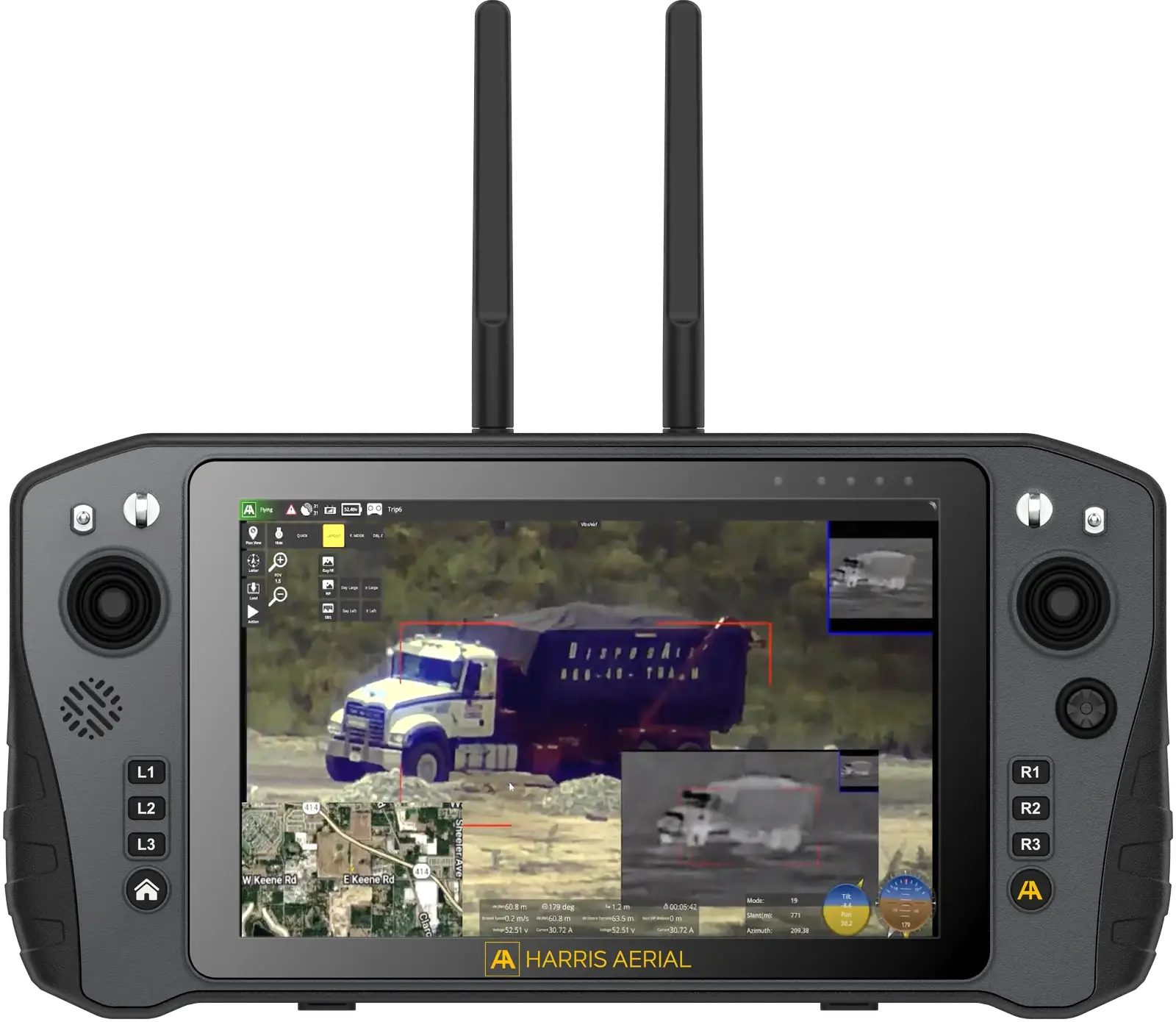
01 — Overview
A ground control station is the operator's half of the aircraft. NEXUS puts flight control, payload control and video on one sealed handheld so a single operator can fly, slew the gimbal and read the take without a laptop open on a tailgate.
The processing sits with the operator rather than back at the truck. The QCS6490's 12 TOPS engine gives detection and tracking workloads somewhere to run on the device, so the link carries what the crew needs rather than everything the sensor sees.
Power is one hot-swappable 50 Wh pack — swap it and keep the aircraft in the air. The ports sit under a single sealed rubber cover with a port insulator, the shell is rated IP54, the chassis is vibration tested to MIL-STD-810H, and the whole thing weighs no more than 1.2 kg.
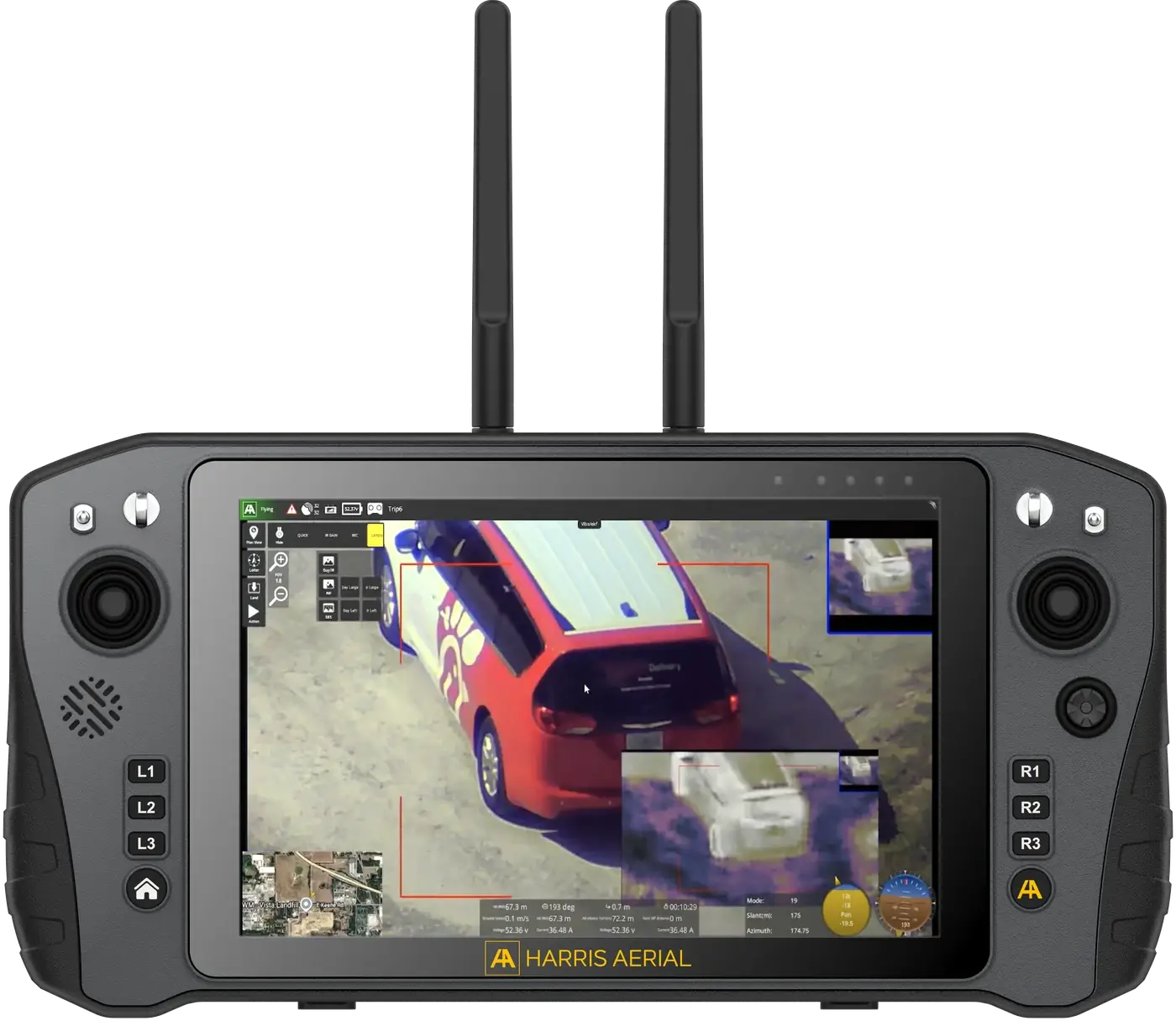
02 — Display
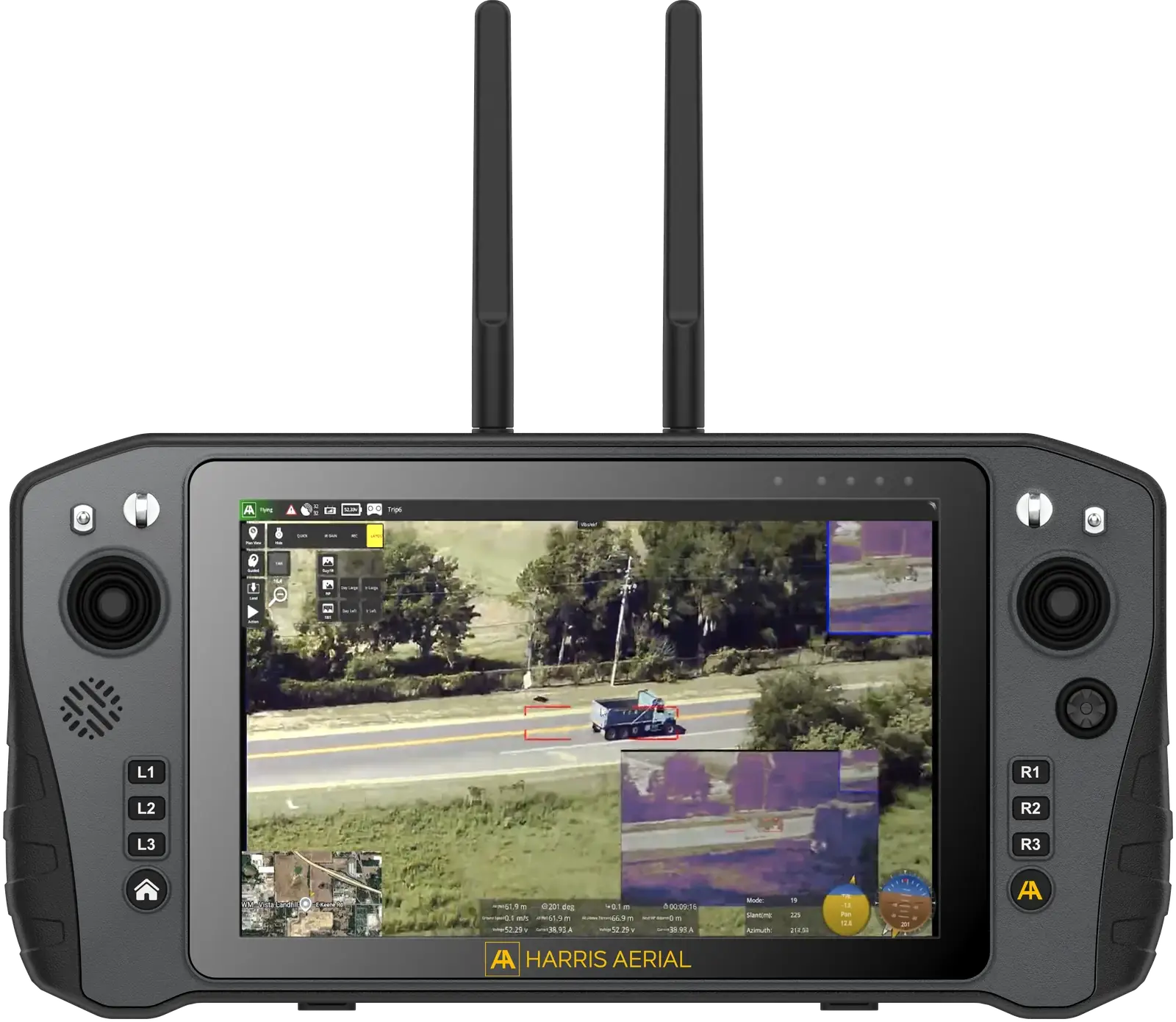
Most handheld stations lose the argument with the sun. NEXUS runs a 7-inch 1920×1200 panel at a 1500 NIT backlight behind 0.8 mm hardened glass with an anti-glare and anti-reflective stack, so the display hood is a convenience rather than a requirement.
The touch layer is PCAP, and the physical controls are laid out so the mission can be flown without touching the glass at all.
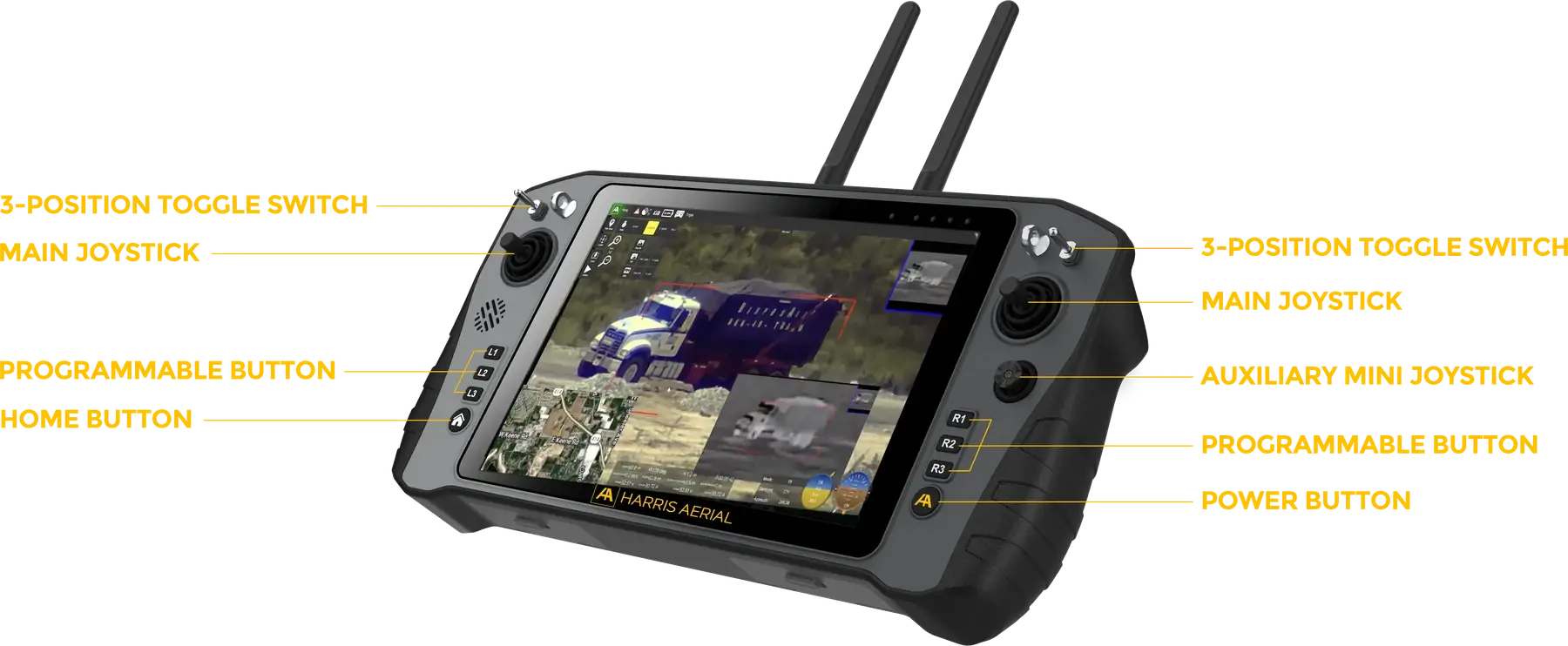
03 — Anatomy
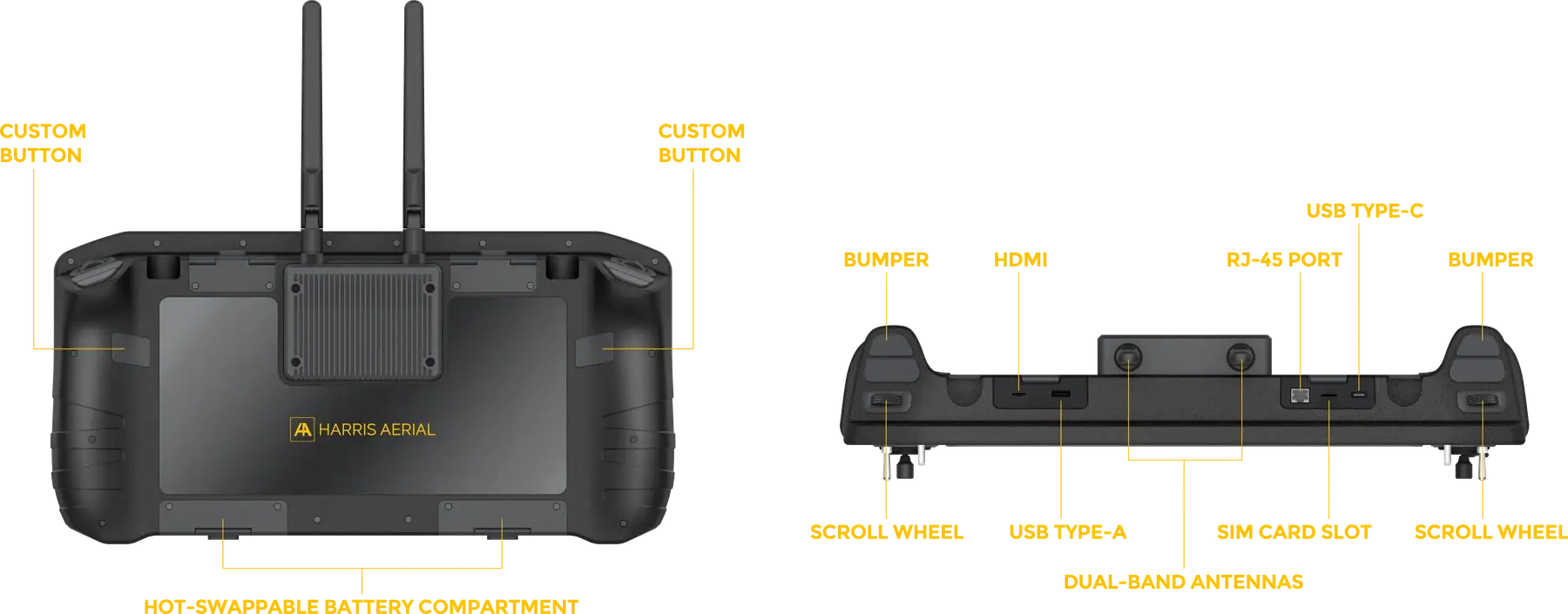
Two 2-axis main joysticks, an auxiliary mini joystick, six programmable buttons, two shoulder bumpers, two triggers and two zoom dials — plus dedicated home and power keys.
04 — The System
Compute, display, flight control, payload control and the radio live in the same sealed shell. Nothing in the kit exists to hold another piece of the kit together.
Compute
An eight-core applications processor with a dedicated AI engine, so detection and tracking run on the station rather than on a laptop at the other end of the link.
Ruggedization
The shell is sealed against dust and splashing water from any direction, and the chassis is vibration tested to the military standard rather than to a marketing number.
Endurance
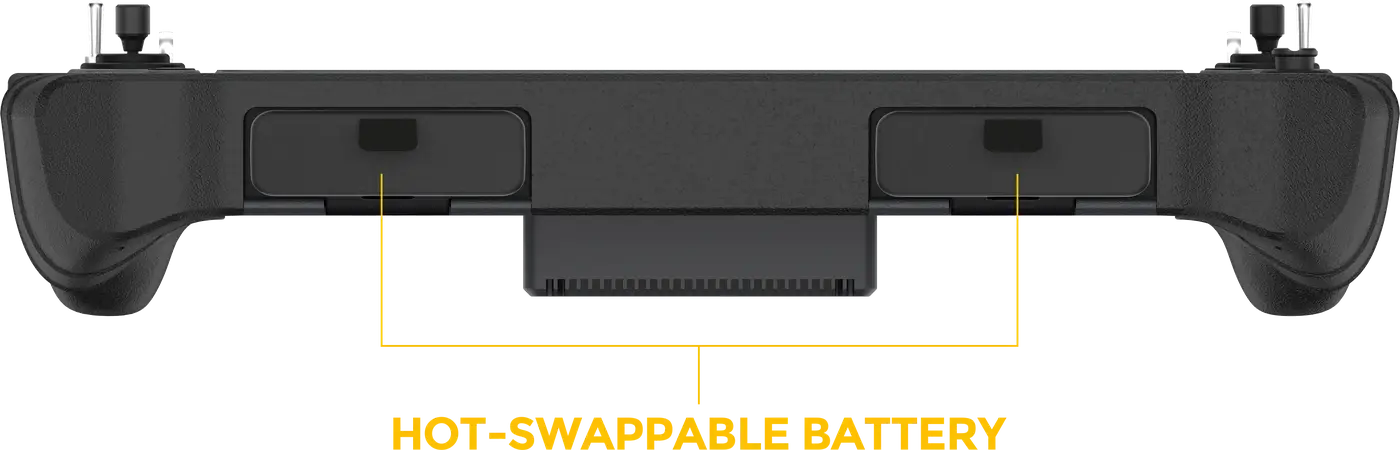
Hot-swappable 2S2P Li-ion at 7.2 V nominal. The pack releases from the underside without tools, so the station carries the swap and the aircraft stays up.
Radio Bay
In the Box
05 — Interfaces
Every port sits under a sealed rubber cover with a port insulator. Open what the mission needs, leave the rest closed, and the IP54 rating stays intact.
06 — Endurance
Batteries release from the underside without tools. Swap the pack and the aircraft never has to come home for the controller.
07 — Specifications
All four groups stay open — jump to one, or read straight through.
| Processor | Qualcomm QCS6490 |
| CPU | 1× A78 2.7 GHz · 3× A78 2.4 GHz |
| CPU (cont.) | 4× A55 1.9 GHz |
| AI Engine | 12 TOPS |
| Operating System | Android 16 |
| Memory | 4 GB LPDDR5 (8 GB optional) |
| Storage | 64 GB UFS (128 GB optional) |
| Display | 7″ LCD · 1920×1200 |
| Brightness | 1500 NIT backlight |
| Touch | PCAP |
| Cover Glass | 0.8 mm hardened · AG/AR |
| Display Hood | Optional |
| Sensors | Ambient light · G-sensor |
| Audio | 1× 1.5 W waterproof speaker |
| Radio Bay | Interchangeable module |
| Radio Compatibility | Microhard pDDL2450 |
| Radio Compatibility | Silvus StreamCaster 4200EP |
| Antennas | 2× external SMA · dual-band |
| Wi-Fi | Wi-Fi 6 |
| Bluetooth | 5.3 |
| GPS | u-blox 10 module |
| USB-C | Charge · OTG · display out |
| USB-A | USB 2.0 |
| Video Out | HDMI 1.4 |
| Network | RJ-45 · 100M Ethernet |
| Expansion | microSD · SIM card slot |
| Radio Interface | Pogo pin |
| Battery | Hot-swappable 2S2P Li-ion |
| Capacity | 50 Wh · 7.2 V nominal |
| Charging | USB-C 45 W AC adapter |
| Indicators | Power LED · charging LED |
| Main Joysticks | 2× 2-axis / 4-directional |
| Auxiliary Joystick | 1× mini joystick |
| Programmable Keys | 6× — L1–L3 / R1–R3 |
| Shoulder Controls | 2× bumpers · 2× triggers |
| Dials | 2× zoom in / out |
| Dedicated Keys | Power · home |
| IP Rating | IP54 |
| Vibration | MIL-STD-810H tested |
| Drop | 5 ft — rear face |
| Weight | ≤ 1.2 kg · 2.7 lbs |
| Charge Temperature | 0 °C to 40 °C |
| Operating Temperature | −20 °C to 50 °C |
| Chassis — Front | Polymer |
| Chassis — Rear | Polymer with TPU grips |
| Tripod Mount | M6 thread, underside |
| Carry | 2× lanyard hooks |
08 — Questions
A ground control station is the operator's side of an unmanned system — the hardware that sends flight commands to the aircraft and receives telemetry and video back. A handheld station like NEXUS combines the flight controller, the payload controller and the video display in one sealed unit, so a single operator can run the whole mission without a laptop or a separate video monitor.
Yes. The panel runs a 1500 NIT backlight behind 0.8 mm hardened glass with an anti-glare and anti-reflective stack. A clip-on display hood is available, but it's there for extreme angles rather than as a requirement for normal daylight operation.
That's what the hot-swap bay is for. The 50 Wh pack releases from the underside of the unit, and the station carries the swap so the link and the mission stay up while the pack is changed.
The radio bay takes an interchangeable external module rather than a soldered-in link. It is compatible with the Microhard pDDL2450 and the Silvus StreamCaster 4200EP series, so the station can be matched to the spectrum and range profile a given mission needs.
The shell is rated IP54, which means it is protected against dust ingress and against water splashing from any direction — field weather, not immersion. The chassis is vibration tested to MIL-STD-810H, and the rear face carries 5 ft drop protection. Front-face drop protection isn't possible on a unit with exposed joystick rods.
It gives detection and tracking workloads somewhere to run on the station itself instead of shipping every frame back over the link to a laptop. In practice that means the processing stays with the operator, and the radio carries what the crew needs rather than everything the sensor sees.
NEXUS is designed for the Harris Aerial Carrier family. If you're pairing it with a specific airframe, radio stack and payload, talk to us about your mission profile and we'll confirm the exact configuration.
Talk to Harris Aerial
Talk to a Harris Aerial specialist about pairing the NEXUS with your Carrier airframe, your radio stack and your mission profile.
Request a Quote Call (407) 725-7886
1043 Seminola Blvd · Casselberry, FL 32707 · Specifications subject to change without notice
Product Literature
Full technical brochure for specification and procurement, or the two-page sheet for a quick send.