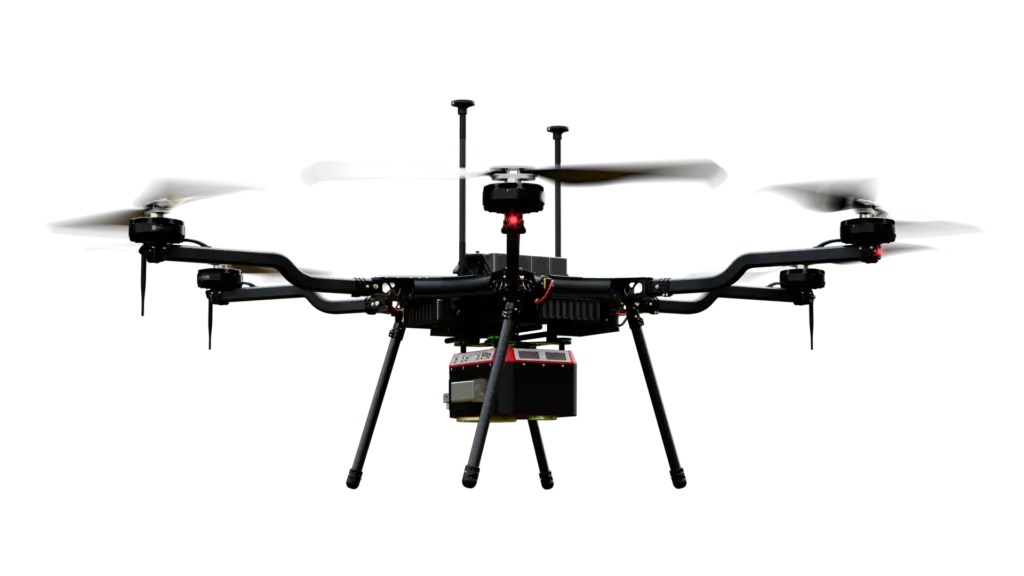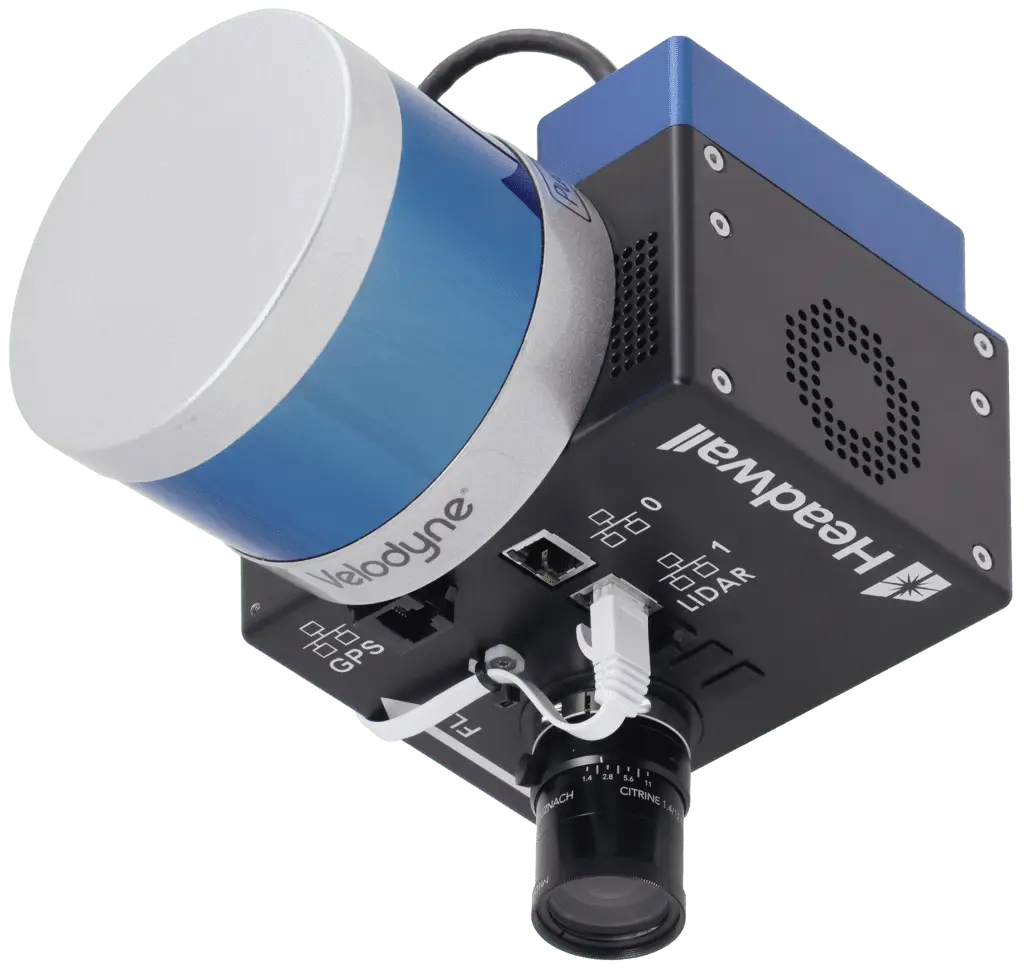
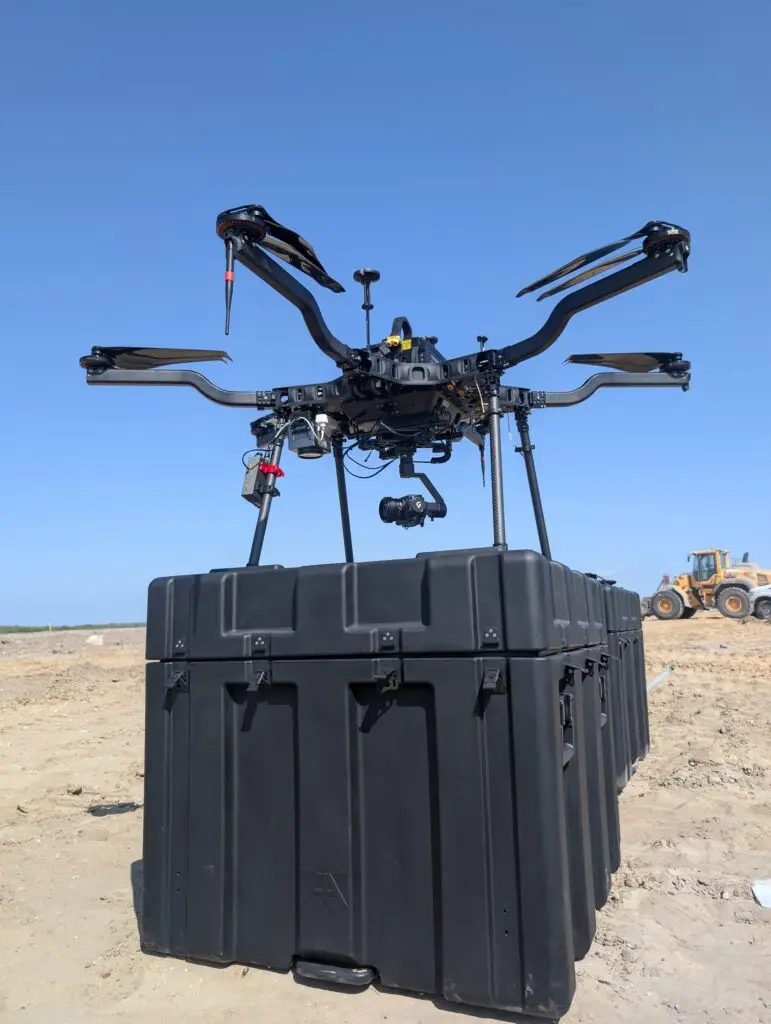
Since September 16, 2023, under 14 CFR 89.105, nearly every drone that has to be registered with the FAA must broadcast Remote ID, and since the FAA’s grace period ended on March 16, 2024, operators who don’t comply face fines and suspension or revocation of their pilot certificates. There are three ways to comply: fly a standard Remote ID drone that broadcasts from the airframe, add a Remote ID broadcast module and keep the aircraft in sight, or fly without Remote ID inside an FAA-recognized identification area. For the company that builds the aircraft, 14 CFR 89.525 adds a labeling requirement, and for heavy-lift buyers there is one more wrinkle: aircraft of 55 pounds or more register through a different FAA process.
| Standard Remote ID drone | Drone with a broadcast module | FAA-recognized identification area | |
|---|---|---|---|
| Where the signal comes from | Built into the aircraft | A module attached to the aircraft | No signal |
| What it broadcasts | Aircraft ID; aircraft position, altitude, speed and direction; control station position and altitude; a time mark; emergency status (14 CFR 89.305) | Module serial number; aircraft position, altitude and speed; takeoff location and altitude; a time mark (14 CFR 89.315) | Nothing |
| Must the pilot keep it in sight? | Not under Part 89 itself. Part 107’s visual line of sight rule still applies unless waived. | Yes, at all times (14 CFR 89.115(a)) | Yes, and the flight stays inside the area (89.115(b)) |
| Label required by 89.525 | On the aircraft | On the module | None |
| Who files the Declaration of Compliance | The aircraft manufacturer | The module manufacturer | Not applicable |
The label rule in 14 CFR 89.525
Section 89.525 says no one may produce a standard Remote ID aircraft unless it displays a label indicating that it meets the requirements of Part 89. Paragraph (b) applies the same rule to broadcast modules. In both cases the label must be in English and be “legible, prominent, and permanently affixed.”
That last phrase does real work on a heavy-lift airframe. A top plate sees sun, fuel, cleaning solvent and gloved hands every flight day. A printed sticker that peels or fades by the end of a season no longer meets the rule, so the label has to be built for the conditions the aircraft actually works in.
Why a broadcast module limits a heavy-lift program
Both routes are legal, and both work for most inspection and mapping jobs. The difference is what each commits you to.
Under 89.115(a), the pilot of a module-equipped aircraft “must be able to see the unmanned aircraft at all times throughout the operation.” For a crew inspecting a structure in view, that changes nothing. For a program that plans to fly corridors beyond visual line of sight, it is the wrong route: a Part 107 waiver does not lift Part 89’s sight requirement for modules, so BVLOS work should start from a standard Remote ID aircraft.
A standard Remote ID aircraft also broadcasts the control station’s live position, not just the takeoff point, which matters when the pilot moves along a long linear job. Under either route, if the broadcast stops in flight the pilot has to land as soon as practicable, so plan missions where a forced landing never puts a heavy payload over people or a road.
Five checks before you buy
- Get the Remote ID serial number. The FAA says to find it on the device, on its controller or in the controller’s startup menus, or to ask the manufacturer.
- Look it up in the FAA’s UAS Declaration of Compliance System. Standard Remote ID aircraft and broadcast modules must be listed on an FAA-accepted declaration. If the device is not listed, the FAA says not to submit a declaration yourself, because only manufacturers can.
- Find the label. Under 89.525 it belongs on the aircraft for a standard Remote ID drone, or on the module for a retrofit.
- Ask how the crew is alerted if the broadcast drops. The pilot must land as soon as practicable, so the crew needs to know the moment it happens.
- Register it the right way for its weight. Drones under 55 pounds register online in FAADroneZone, where Part 107 pilots add each device separately and enter its Remote ID serial number. Aircraft of 55 pounds or more must use the traditional Part 47 aircraft registration instead, which issues an N-number like a manned aircraft.
Remote ID is not NDAA or Blue UAS compliance
Buyers mix these up often. Remote ID is an FAA operating rule that applies to nearly every registered drone. NDAA Section 848 is a procurement rule about where a drone and its critical components come from, and Blue UAS is the Department of Defense’s list of cleared platforms. A drone can broadcast Remote ID perfectly and still fail an NDAA review because of its flight controller or radio.
If you are buying for a defense program, check all three. Our Section 848 explainer walks through the component list, and the Blue UAS drones page shows which Harris platforms are cleared.
Planning a heavy-lift program and working through Remote ID and registration? Talk to our engineers, or compare the Carrier fleet.