For transmission and distribution inspection at real scale, the limiting factor usually isn’t the camera. It’s how long the aircraft can stay on the line and how much sensor it can carry at once. A heavy-lift platform that flies longer and swaps between LiDAR, thermal, and high-resolution imaging covers more circuit per sortie and turns three single-purpose flights into one. And for utilities that answer to federal funding or critical-infrastructure security requirements, the airframe also has to clear the compliance bar, which is exactly where many imported inspection drones now fall short.
Start with the constraint, not the camera
Utility inspection is really several jobs stacked together: vegetation encroachment, conductor and connector condition, insulator and hardware defects, structure integrity, and thermal anomalies, often across hundreds of miles of right-of-way. A picture-taking drone handles one structure. A program needs an aircraft that can carry the right instruments and stay up long enough to make each launch count.
Two numbers decide that. Endurance sets how much line you cover before you land, so longer flights mean fewer launch points and fewer road moves. Payload margin sets which instruments you can fly at all, because the sensors that find real defects are heavy, and the efficient missions carry more than one of them at a time. Get those two right and the camera choice takes care of itself.
The sensor stack we fly on utility work
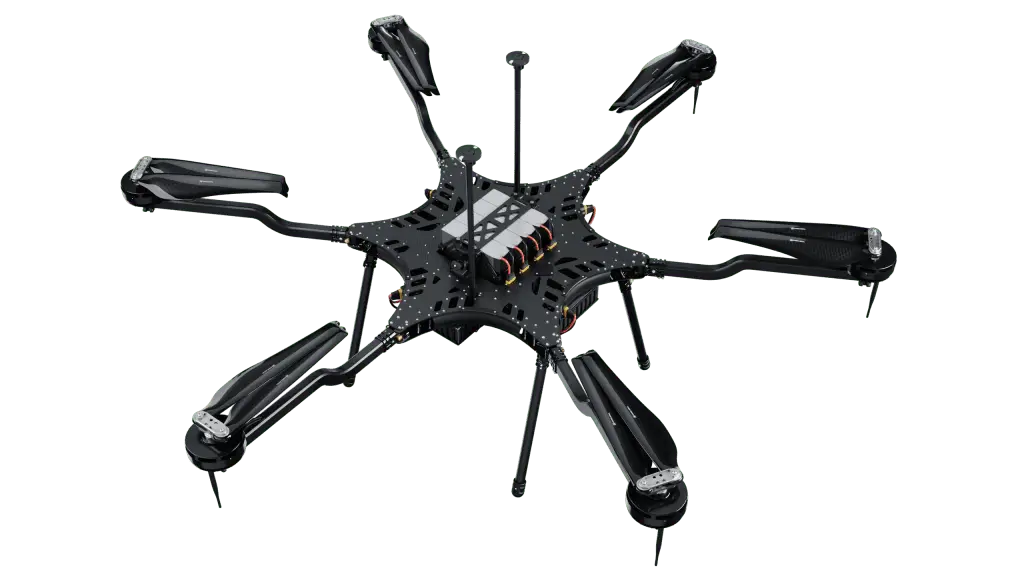
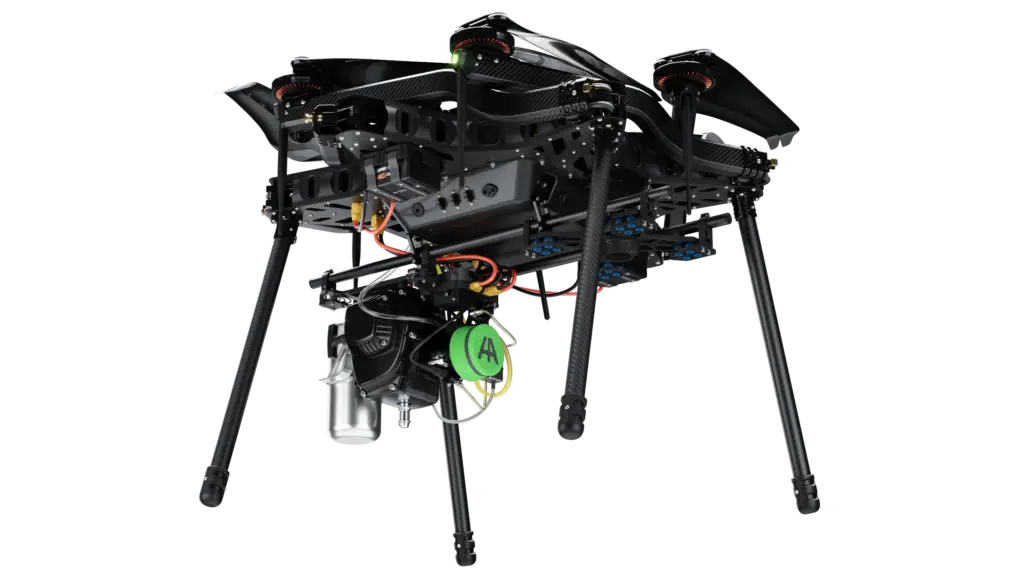
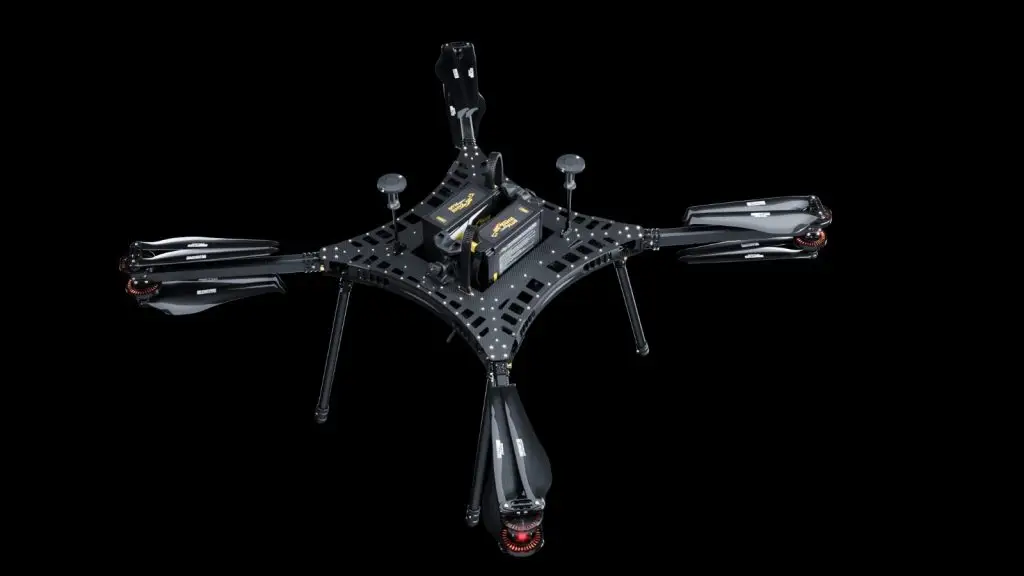
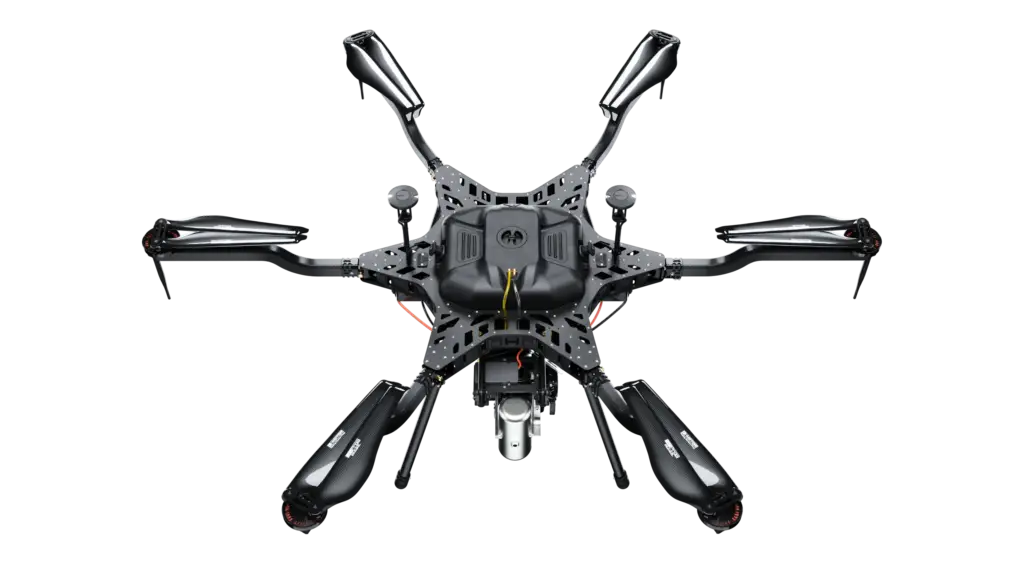
At our demo days and integration flights, the Carrier platforms carry the same instruments a utility program depends on, and swap between them in the field:
- LiDAR for vegetation-clearance modeling, conductor sag and catenary analysis, and structure geometry. We integrate and fly systems such as Phoenix LiDAR, GeoCue TrueView, and RedTail LiDAR on the Carrier airframes. Browse the LiDAR payloads.
- Thermal and EO/IR to catch overheating connectors, compromised splices, and hotspots before they fail, using radiometric thermal payloads and long-range EO/IR turrets like the NextVision Nighthawk2-UZ. See the EO/IR camera payloads.
- High-resolution RGB for close visual inspection of insulators, dampers, and structural hardware, so a defect gets documented without putting a lineworker on the pole. See high-resolution cameras.
Because the payload is modular, one airframe becomes a LiDAR corridor-mapper on Monday and a thermal fault-finder on Tuesday. You change the sensor, not the aircraft. Payload weights, integrations, and endurance are configuration-specific, so confirm them against the platform pages or ask our engineering team rather than trusting a round number in a blog post.
Where heavy-lift pays for itself
Small inspection quadcopters are fine for a single structure. Across a circuit, their limits turn into cost through short flights, single sensors, and constant relocation. A heavy-lift platform changes that math. A hybrid drone such as the Carrier H6 Hybrid EFI is rated for up to 240 minutes of flight on its onboard EFI generator (full specs on the platform page), several times what a battery-only airframe gives you, so you cover more line per launch. It’s got the payload margin to fly the heavier mapping and inspection instruments a light platform can’t lift. And it can carry more than one sensor, so a single pass captures LiDAR and thermal and visual together. Fewer sorties and fewer mobilizations per mile of line is where an inspection program actually saves money. Explore the airframes built for this on our utility and powerline inspection page and across the Carrier heavy-lift lineup.
The compliance gate for grid work
Electric utilities sit squarely inside critical infrastructure, and the rules that govern federal drone use increasingly reach utility work through funding, cybersecurity, and data-handling requirements. Many imported inspection drones are now restricted from federal and federally funded programs, and the security posture of the airframe and its data path is a live procurement question rather than an afterthought. Choosing an American-made, NDAA-compliant platform keeps the compliance conversation from stopping a program after the aircraft is already bought. If that landscape is new to your team, start with our NDAA-Compliant Heavy-Lift Drones: 2026 Blue UAS Guide.
The bottom line: pick the platform by endurance, payload margin, and compliance first, then let the sensor set follow. That’s what turns a drone into an inspection program instead of a single good photo.
Frequently asked questions
What kind of drone is best for powerline inspection?
For single structures, a small inspection drone is fine. For transmission and distribution programs at scale, a heavy-lift platform with long endurance and swappable LiDAR, thermal, and high-resolution payloads covers far more line per sortie and captures multiple data types in one pass.
What sensors are used for utility and powerline inspection?
The core three are LiDAR for vegetation clearance, wire sag, and structure geometry; radiometric thermal or EO/IR for overheating connectors and hotspots; and high-resolution RGB for visual inspection of insulators and hardware. Many programs fly more than one on a single mission.
Do powerline inspection drones need to be NDAA-compliant?
It depends on your funding and security requirements. Utilities are critical infrastructure, and federal or federally funded programs generally require compliant, non-covered airframes. Choosing an NDAA-compliant, American-made platform avoids a forced migration later.
Can one drone carry both LiDAR and a thermal camera?
On a heavy-lift platform with the payload margin for it, yes. Modular, swappable payload bays let a single airframe carry or switch between LiDAR, thermal, and visual sensors depending on the mission.
Ben Harris, Harris Aerial · Casselberry, FL. Harris Aerial designs and machines American-made heavy-lift and long-endurance UAS in-house in Florida, engineered to carry demanding sensor payloads on missions that can’t fail.
Planning a utility or transmission inspection program? See the utility and powerline inspection page and the Carrier platform lineup, or talk to our team about matching an airframe and payload set to your grid.