
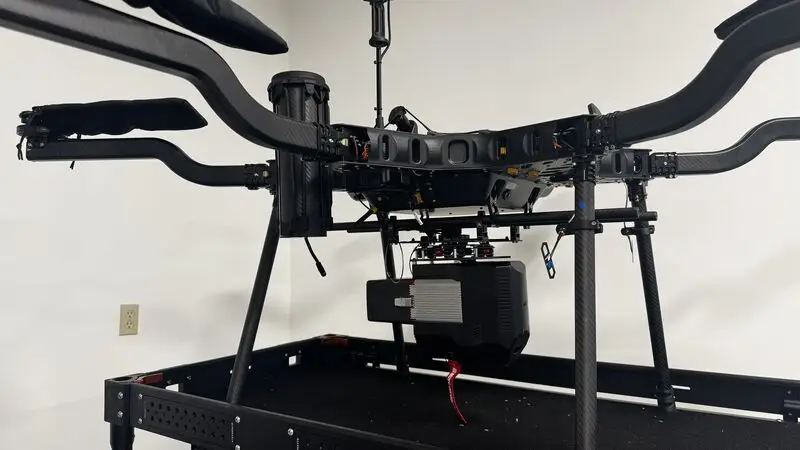
DRS-25 Drone Parachute Recovery System
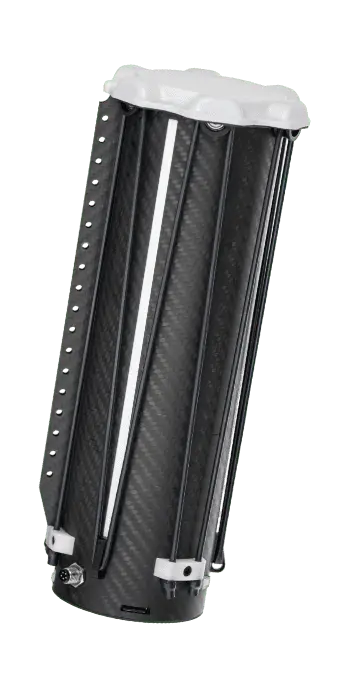
Autonomous Parachute Recovery For 15-25 kg UAVs
Autonomous Drone Parachute Recovery System (DRS-25)
System built for 15–25 kg multicopters with intelligent self-monitoring and safe descent.
Typical applications are:
Emergency recovery during total system failures or loss of control
Safe descent of critical sensors, LiDAR, cameras, and payloads
Mitigating risk in BVLOS, urban, or congested-area flights
Insurance compliance and safer operations over populated zones
Unique system advantages
The DRS-25 is engineered to operate fully autonomously, independent from the drone’s flight controller or radio link, detecting critical failures via intelligent onboard algorithms. The system uses a patented electric catapult mechanism (no servos, no pyrotechnics, no CO₂) for parachute deployment. It is lightweight (~600 g) and compact (250 × 75 mm), yet robust and reusable—ready in minutes post-deployment. Its modular bayonet mounting system enables fast installation and removal. The DRS-25 ensures safe, controlled descent (2–3.6 m/s) even if all electronics fail, protecting equipment and minimizing risk to bystanders.
- Autonomous Deployment System
- Non-Pyrotechnic Catapult Design
- Lightweight & Compact Build
- Reusable & Quick Repack
- MAVLink / DJI-API Compatible
Specifications
Unveiling the Power and Performance Details
| DRS-25 Specifications | |
|---|---|
| Technical | |
| MTOW Range | 15 – 25 kg |
| System Weight | ~600 g |
| Height / Diameter | 250 mm / 100 mm |
| Parachute Deployment | Within 30 m |
| Interfaces | MAVLink (standard), PWM, Custom; optional RC Trigger, Geofencing, IP protection |
| Descent Velocity | 2 – 3.6 m/s |
| Impact Energy Tolerance | 30 – 162 J |
| Operational | |
| Deployment Altitude | 10 – 15 m (depending on takeoff weight) |
| Certifications & Standards | Complies with ASTM F3322, MOC-2511, MOC-2512 |