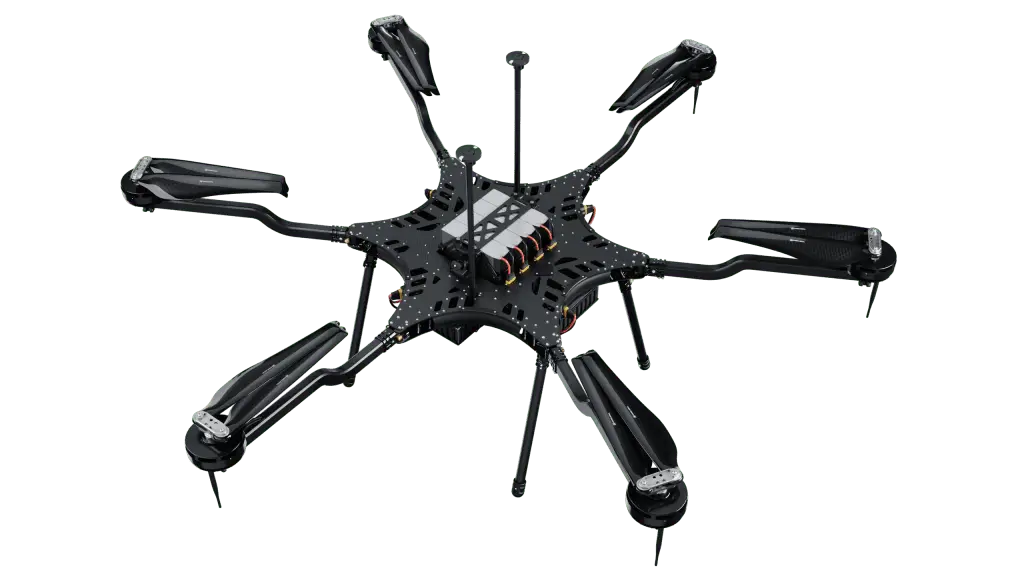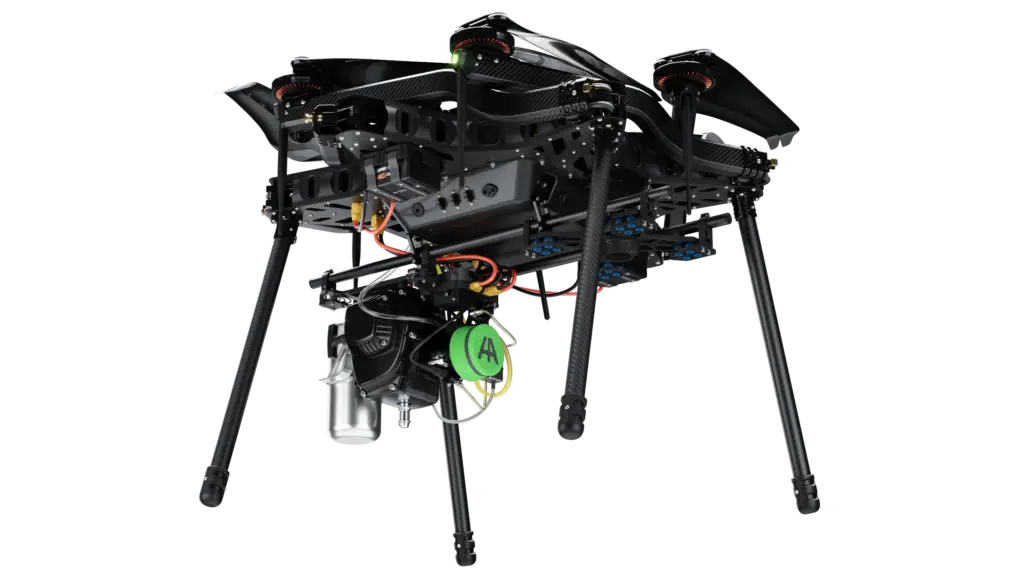
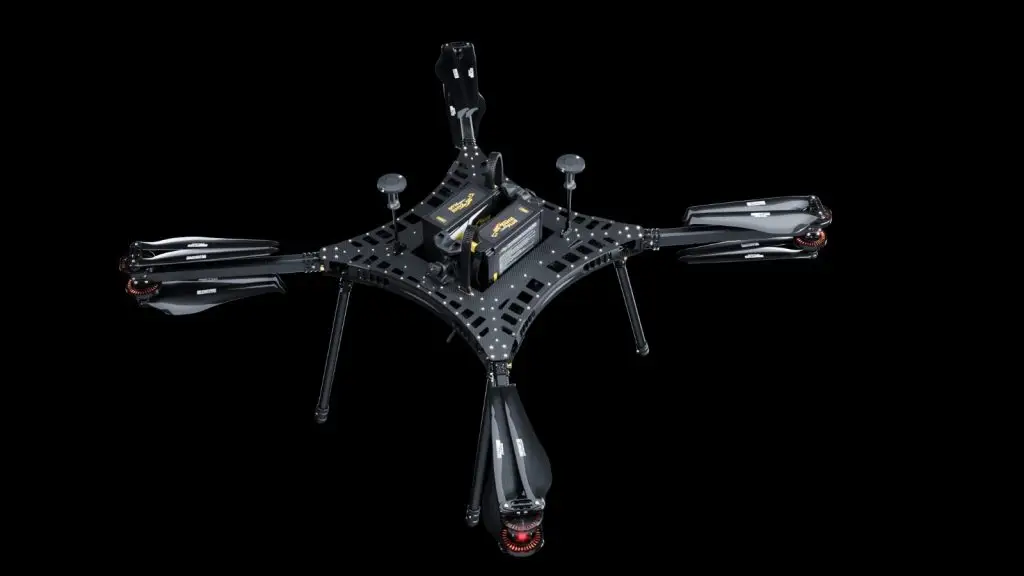
Section 848 of the FY2020 National Defense Authorization Act bars the Department of Defense from operating or buying a drone that’s built in a covered foreign country, or that uses certain critical components from one. The covered parts are flight controllers, radios, data transmission devices, cameras, gimbals, ground control systems, operating software, and network connectivity or data storage. Section 817 of the FY2023 NDAA widened the covered countries beyond China to include Russia, Iran and North Korea. An aircraft is only “NDAA compliant” if every one of those parts clears the bar, which is why the honest way to check is part by part.
| Component | What Section 848 restricts | What to ask for |
|---|---|---|
| Flight controller | Manufactured in a covered country, or by a company domiciled there | The board’s manufacturer and where it’s built |
| Radios and data links | Same test, for command-and-control and video transmission hardware | Separate answers for the C2 radio and the video link |
| Cameras | Same test, including payload cameras | The camera manufacturer, not just the integrator |
| Gimbals | Same test | Gimbal make and country of manufacture |
| Ground control system | Developed in a covered country, or by a company domiciled there | Origin of the GCS hardware and its control app |
| Operating software | Developed in a covered country, or by a company domiciled there | Where the firmware and the flight app are developed |
| Connectivity and data storage | Located in, or administered by, a company domiciled in a covered country | Where flight logs and imagery are stored, and who runs that service |
What Section 848 actually says
The text is short. Public Law 116-92, signed in December 2019, tells the Secretary of Defense not to operate, or contract to procure, an unmanned aircraft system that’s made in a covered foreign country or that uses the components in the table above from one. At first the only covered country was China. Section 817 of the FY2023 NDAA added Russia, Iran and North Korea.
Two things trip buyers up. First, the law is written as a restriction on the Department of Defense, not as a certification program for manufacturers. Nobody issues an “NDAA certificate.” A seller who says a drone is NDAA compliant is making a supply-chain claim that you, or your contracting officer, have to be able to check. Second, the component list sits on top of the where-it’s-made test. A frame built in Florida with a covered-country camera on it still fails.
Why the payload is where compliance usually breaks
Airframe makers tend to talk about the aircraft. Section 848 talks about the whole system, and cameras and gimbals are named in it. Many popular imaging payloads and gimbals come from manufacturers in covered countries, so a compliant airframe can become a non-compliant system the moment a sensor goes on.
The fix is simple and worth insisting on: ask for the component declaration on the exact configuration being quoted, payload and ground station included. A heavy-lift build is a system of parts from several suppliers, and the airframe maker’s answer only covers what the airframe maker controls.
What Section 848 doesn’t cover
Motors, batteries, propellers and frames aren’t on the Section 848 list. That doesn’t mean they are free of federal rules. Drone motors use permanent magnets, and a separate statute, 10 U.S.C. 4872, restricts the Department of Defense from buying end items that contain neodymium-iron-boron or samarium-cobalt magnets made in China, Russia, North Korea or Iran. That law has its own exceptions, including for many commercially available off-the-shelf items, so whether it applies to a given purchase is a contracting question, not something a spec sheet can settle.
Section 848 is also not the only rule in play. The American Security Drone Act, passed inside the FY2024 NDAA, extended a federal ban on buying and operating covered drones, and on federal money paying for them, to every federal agency. Those prohibitions took effect on December 22, 2025, the same day the FCC added foreign-produced drones and drone components to its Covered List. We track those changes on our DJI ban buyer’s guide.
How to verify a drone is NDAA compliant
- Get the component list in writing for the exact build you’re buying: flight controller, C2 radio, video link, camera, gimbal, ground station, firmware, flight app, and any cloud service. Each line needs a manufacturer and a country.
- Check the payload separately. If a third party supplies the sensor, get that supplier’s declaration too.
- Ask where your data goes. If the flight app syncs logs or imagery anywhere, find out where that storage sits and who administers it.
- Check the DCMA Blue List if a federal customer is involved. A Blue List entry names a specific cleared configuration, and it’s the strongest independent signal available.
- Re-check after changes. A radio swap or a new camera changes the answer. Compliance belongs to a configuration, not to a model name.
Our longer guide to NDAA-compliant heavy-lift drones covers Blue UAS, Green UAS and self-declared compliance side by side, and how each fits a heavy-lift purchase.
Is a US-made drone automatically NDAA compliant?
No. “Made in USA” and “NDAA compliant” answer different questions. A US-assembled aircraft can still carry a covered radio or camera, and an aircraft assembled in a non-covered country could, in principle, avoid every covered component. We design and build our Carrier aircraft in Casselberry, Florida, and you can ask our team for the component declaration on any configuration we quote. If you’re buying for a defense program, our military heavy-lift drone overview is the place to start.
Frequently asked questions
What is NDAA Section 848?
It is the provision of the FY2020 National Defense Authorization Act that bars the Department of Defense from operating or buying drones made in a covered foreign country, or drones that use flight controllers, radios, data transmission devices, cameras, gimbals, ground control systems, operating software, or network connectivity and data storage from one.
Which countries does Section 848 cover?
China originally. Section 817 of the FY2023 NDAA added Russia, Iran and North Korea.
Who certifies that a drone is NDAA compliant?
No agency issues an NDAA compliance certificate. Manufacturers make the claim, and buyers verify it. Independent signals include the DCMA Blue List for cleared configurations and third-party programs such as AUVSI’s Green UAS.
Do drone motors and batteries have to be NDAA compliant?
They aren’t on the Section 848 component list. Motor magnets can fall under a separate defense procurement restriction, 10 U.S.C. 4872, which has its own exceptions, so check with the contracting officer.
Does Section 848 apply to commercial operators?
Not directly, unless a Department of Defense contract requires compliant aircraft. Federal agencies are covered by the American Security Drone Act, and states including Florida and Texas restrict their own agencies from buying or flying Chinese-made drones, as our DJI ban guide details.